
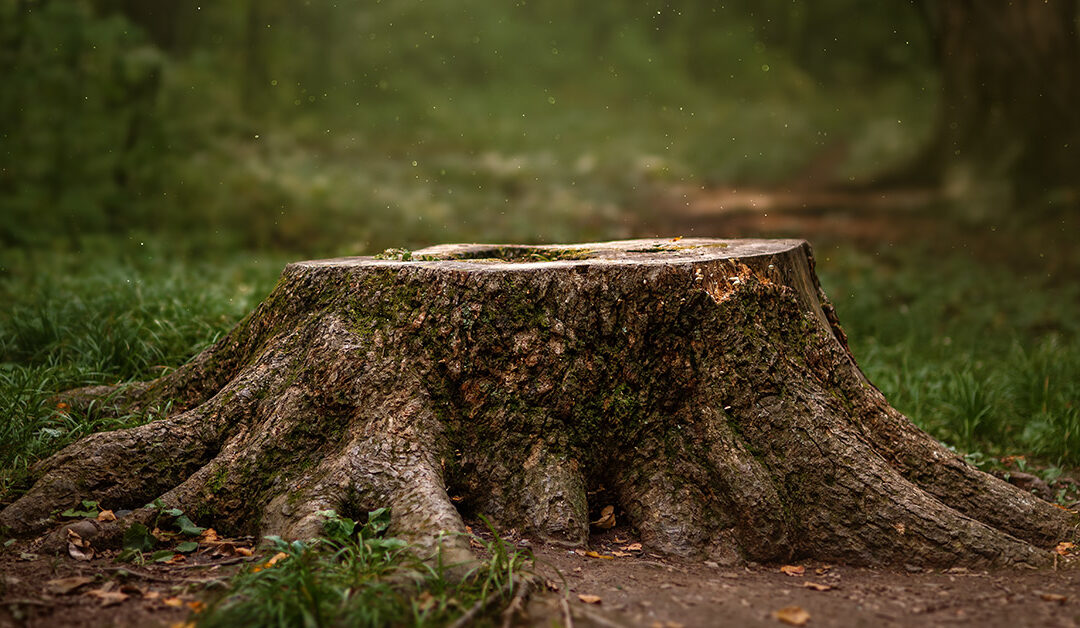
Ahem – clears throat – yes, that’s right, we’re strictly talking about stump grinding here.
When you’re looking at an ugly stump in your yard, the obvious question is: what actually affects the price and difficulty of grinding it down? Is it the size? The shape? The wood type? The location? Or is it something else entirely?
At The Good Grinder, we’ve ground just about everything you can find in Edmonton and area. Here’s the truth: the answer is yes, it’s actually super simple. Let us explain.
Size of Stump
This is the question everybody asks first: Does a bigger stump cost more?
Short answer: yes… but there’s a catch.
At The Good Grinder, stump grinding is priced by inch diameter measured across the base of the stump. Most stumps we see in Edmonton fall somewhere around 20–30 inches in diameter, but we’ve seen everything from tiny “midget-sized” fruit tree stumps all the way up to absolute monsters.
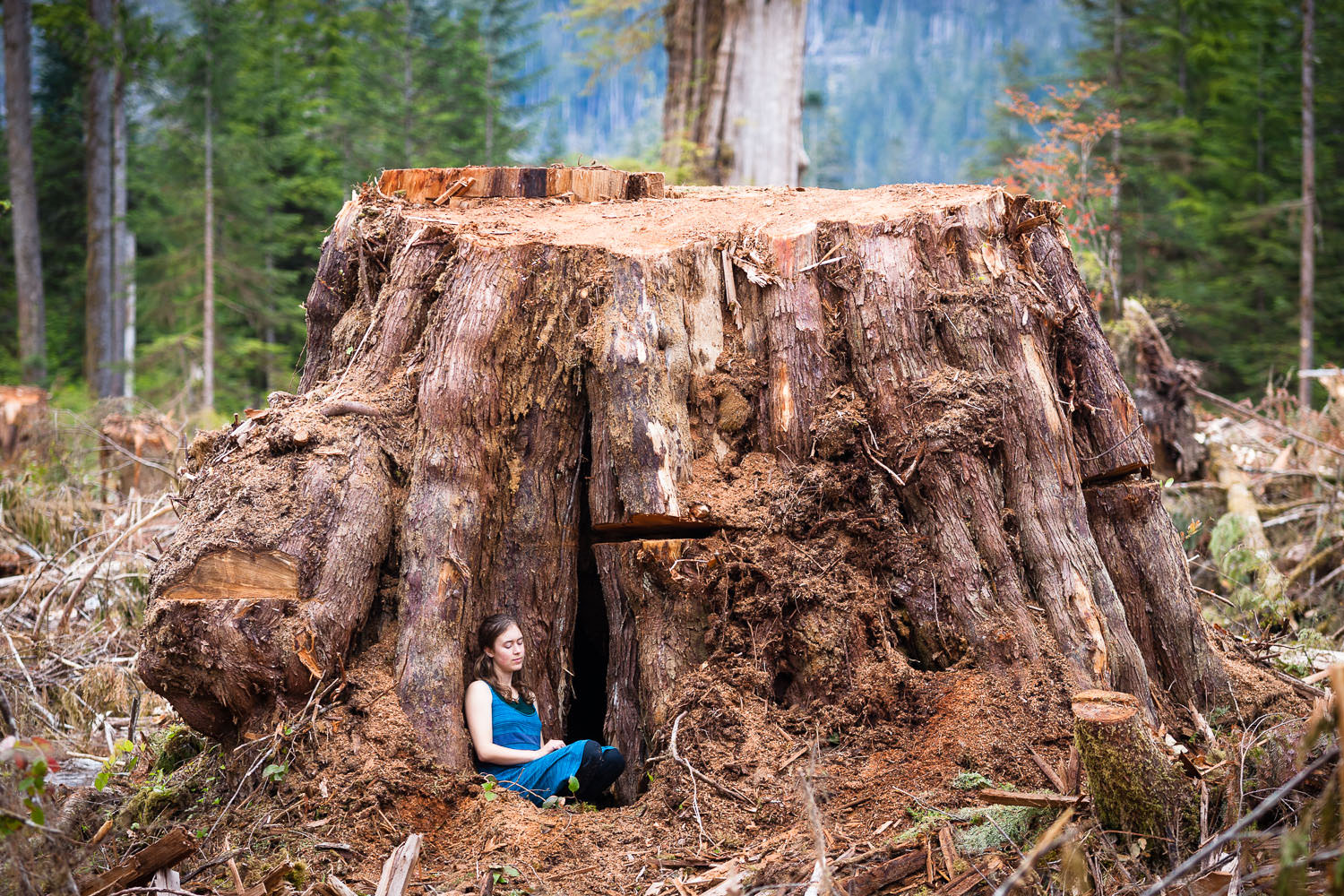
Now, if you somehow have a 20-foot-wide stump in Edmonton, first of all, congratulations. Second, you will definitely win “Stump of the Month.” Realistically, though, trees that size belong more in old-growth BC coastal forests than Edmonton Alberta neighborhoods.
Here’s where things get interesting. A stump isn’t just a flat circle, it’s basically a cylinder (or sometimes more of a cylinder-pyramid depending on root flare). That means the amount of wood inside increases cubically as the stump gets bigger. The real volume formula for a stump is:
Meaning when the diameter doubles, the amount of wood inside increases far more than double.
So why do we still charge by diameter?
Because it keeps pricing simple, fair, and predictable for everyone. The funny part is that larger stumps actually give customers a better “bang for your buck” compared to tiny stumps.
Small stump? No disadvantage on price. Big stump? Bigger savings relative to the amount of wood being removed.
And yes, before anyone asks, I actually do know what I’m talking about here. I studied engineering at the University of Alberta and I’m finishing mechanical engineering at Northern Alberta Institute of Technology. So technically this stump math is peer reviewed… Who knew there would be math behind stump grinding?
Does the Type of Wood Matter?
Absolutely.
Does it change the quote?
Nope.
Alberta has a wide variety of tree species, and every wood type grinds differently.
| Common Softwoods in Edmonton | Common Hardwoods in Edmonton |
| Spruce Pine Fir Cedar Larch | Elm Maple Birch Ash Poplar Oak Apple Mountain Ash |
Harder woods take longer to grind and cause significantly more tooth wear on the machine. However, we still keep our pricing simple and fair by charging based on diameter rather than tree species.
No “hardwood surcharge.”
No hidden “your tree fought back” fee.
Does Shape Matter?
We’ve seen every stump shape imaginable.
- What if the stump is oval? No problem. We simply average the measurements in an “X” pattern across the stump to determine the diameter.
- What if it’s a cluster of stumps? Regular measuments apply.
- What if it’s a bush or hedge stump? Regular measuments apply.
- What if roots need grinding too? Root grinding details can be found here.
- What if the stump is tall? Height is not a factor in our quotes (as long as it is under 4 ft tall).
Now if your stump happens to be perfectly symmetrical like a hexagon or a mathematically perfect circle, you might actually deserve “Stump of the Month” for geometry alone.
When Is the Best Time for Stump Grinding?
Anytime!
The main thing we care about is site conditions.
We prefer the area to be reasonably dry so we can avoid making mud and disturbing the cleanliness of your lawn or landscaping. Frozen ground can also limit grinding. So generally speaking, stump grinding season in Edmonton runs from early March to late November depending on weather and ground conditions.
Now technically there are a few conditions that could delay us:
- Extreme heat
- Tornados
- Earthquakes (maybe it ill uproot your stump for you)
- Alien invasion
If temperatures climb above 35°C, we may occasionally reschedule for safety reasons. Both for machine reliability and to avoid heat stroke. Turns out stump grinders feel heat too and we need to care for them so they can keep working!
What If the Stump Is in a Tight Area, Flower Bed, or Near a Fence?
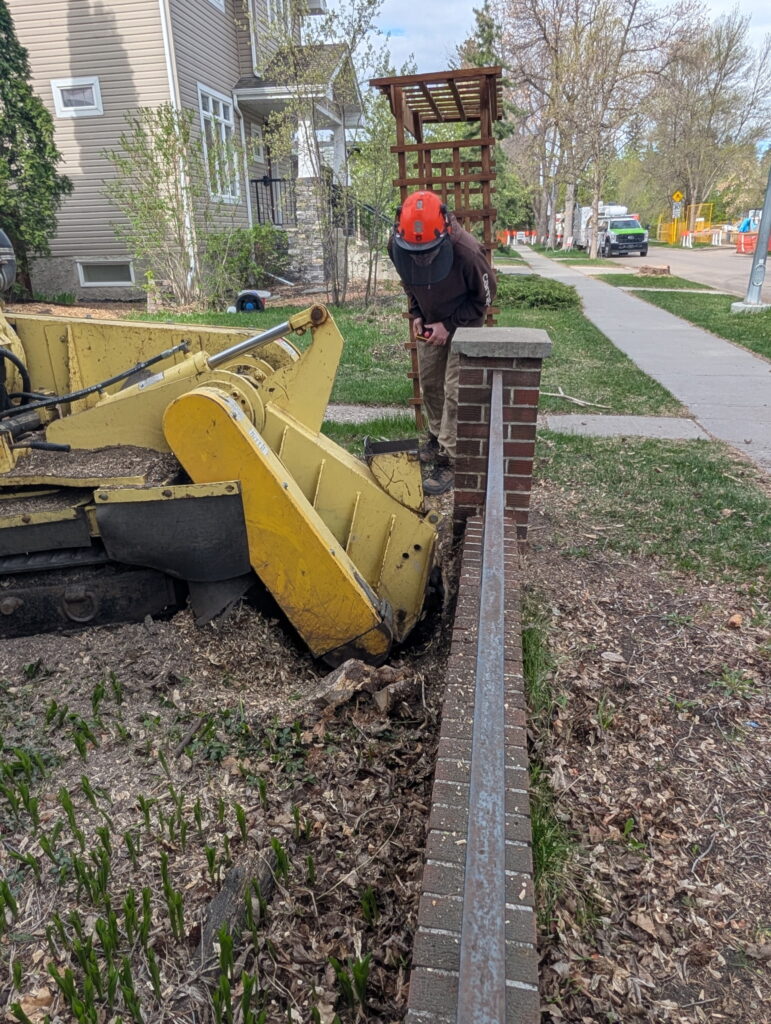
Good news! Modern stump grinders are incredibly precise. We can grind extremely close to fences, houses, retaining walls, and structures, often within about 1 inch when necessary.
If access is tight, we simply use one of our smaller machines designed for narrow spaces and backyard access.
Raised flower beds may sometimes require an additional charge depending on the setup and access difficulty, but we’ll always evaluate this beforehand and explain everything clearly.
If you’re planning to plant another tree afterward, we’ll also discuss the best grinding depth and placement strategy to help the next tree succeed long-term.
Do I Need to Remove Rocks, Landscape Fabric, or Decorations?
Yes please.
We always ask homeowners to remove:
- Rocks
- Landscape fabric
- Decorative edging
- Metal objects
- Garden decorations
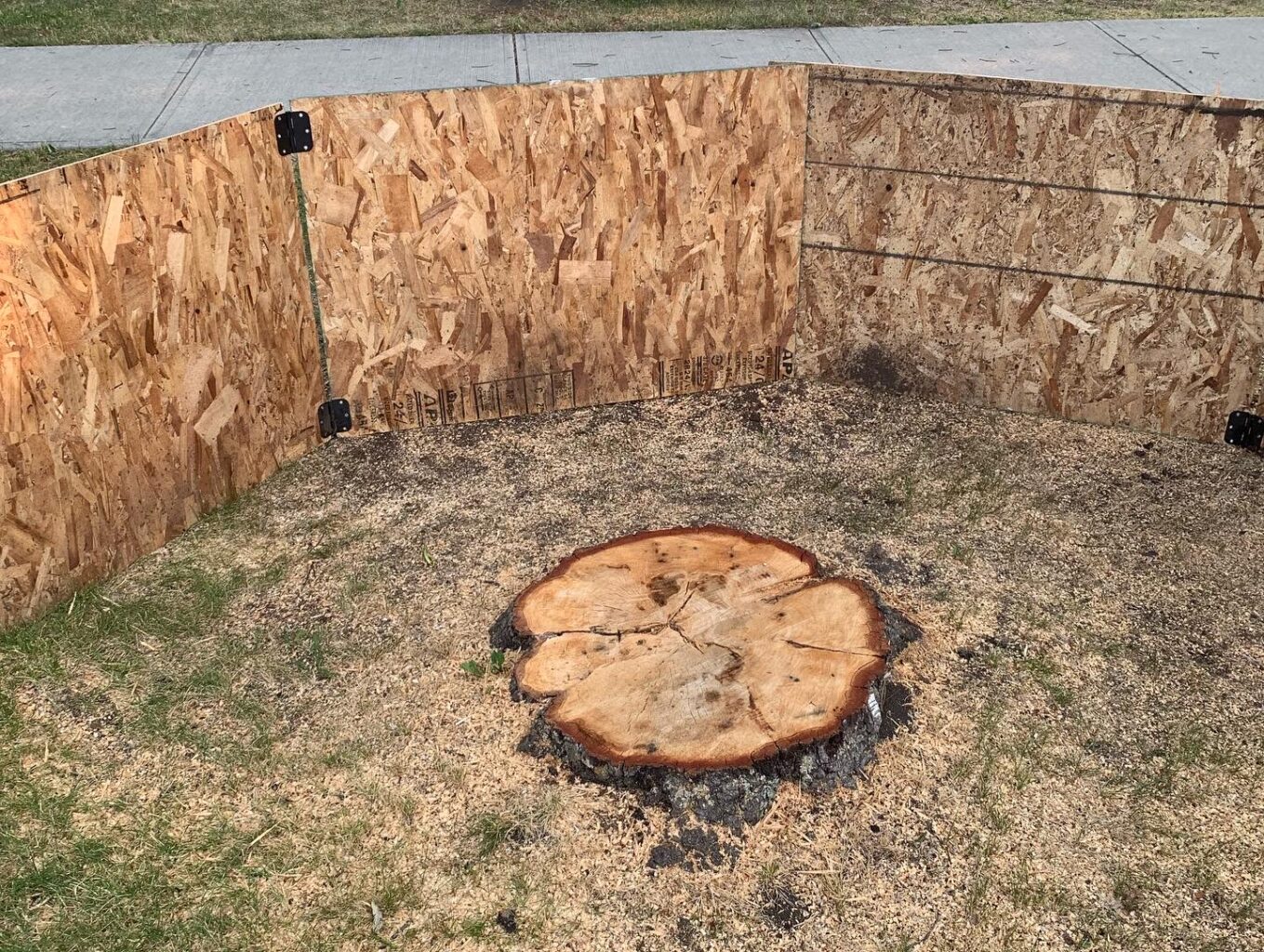
These materials can damage grinder teeth, interfere with the machine, or potentially affect surrounding property. We already use protective boards and shields to help protect the area during grinding. But but can you ever really be too safe?
Final Thoughts
At the end of the day, stump grinding is less about the stump being “perfect” and more about having the right equipment and experience to handle whatever situation shows up.
- Big or small.
- Hardwood or softwood.
- Round, oval, clustered, or ugly.
At The Good Grinder, we’ve proudly seen worse.
And if somehow you do have a 20-foot-wide perfectly symmetrical hardwood stump that we are grinding during a tornado… congratulations.
You’ve officially earned Stump of the Month.